Home / Technical Services

Technical Services Selection · Application · Q&A

Selection methods, application techniques and answers to common questions for engineers and procurement — compiled by the Zhenxing technical team and continuously updated.

All Selection Application Q&A
Selection
2026-09-15 · Specialty Mortar

How to Choose Grout: Matching Strength Class to Flowability

From bearing grouting to equipment base re-grouting — the relationship between C40–C80 strength classes and cone flow, avoiding both over-engineering and under-specification.

Read more →
Application
2026-09-12 · Prestressed Works

Duct Grouting: Common Problems & Prevention

Causes of incomplete filling, bleeding and voids in prestressed duct grouting, with field control of water-cement ratio, pressure and holding time.

Read more →
Selection
2026-09-08 · Mortar Admixture

How Mortar Admixtures Improve Workability & Water Retention

The mechanism of Lime King and Modele — air entrainment, thickening and water retention — and how to dose them properly for better plastering and masonry.

Read more →
Test Reading
2026-09-05 · Quality Testing

How to Read a Test Report: Key Indicators at a Glance

Compressive strength, flow, expansion, bleeding rate and chloride content — a quick guide to reading inspection reports and judging compliance.

Read more →
Application
2026-09-01 · Strengthening & Repair

Choosing Materials for Structural Strengthening & Repair

Where to use polymer repair mortar, ECC high-ductility concrete and high-strength grout respectively — surface preparation and curing are key.

Read more →
Q&A
2026-08-28 · Ready-Mixed Mortar

Cutting Cost at the Batching Plant: How to Dose Mortar Additives

For ready-mixed mortar producers — how to select and dose dry-mix and wet-mix additives to optimize formulation and reduce overall cost.

Read more →
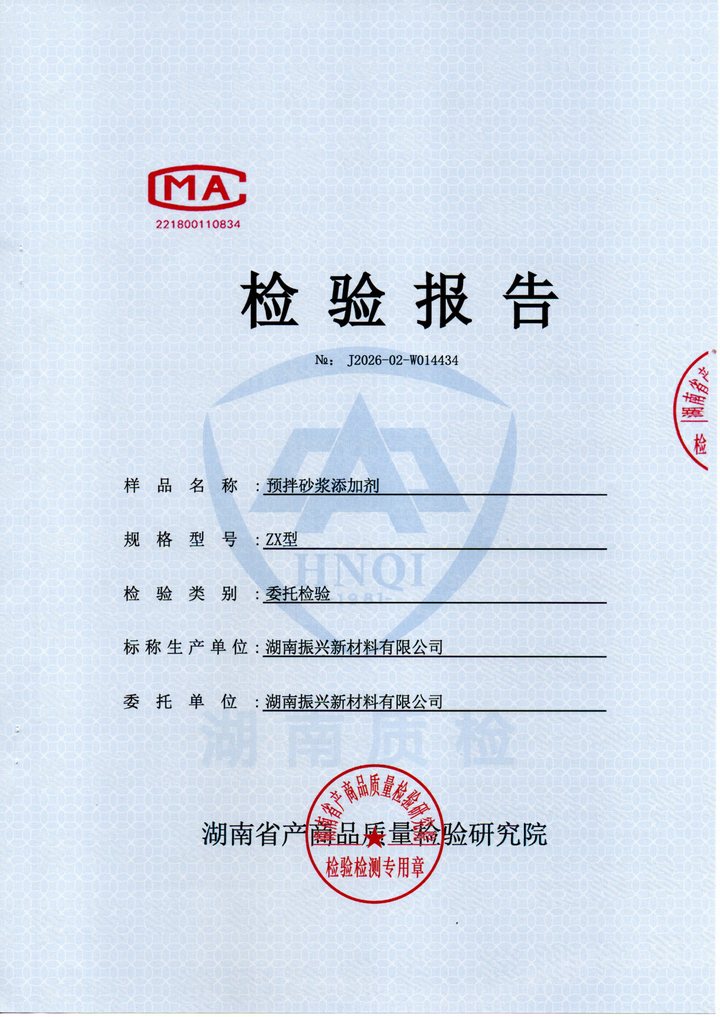
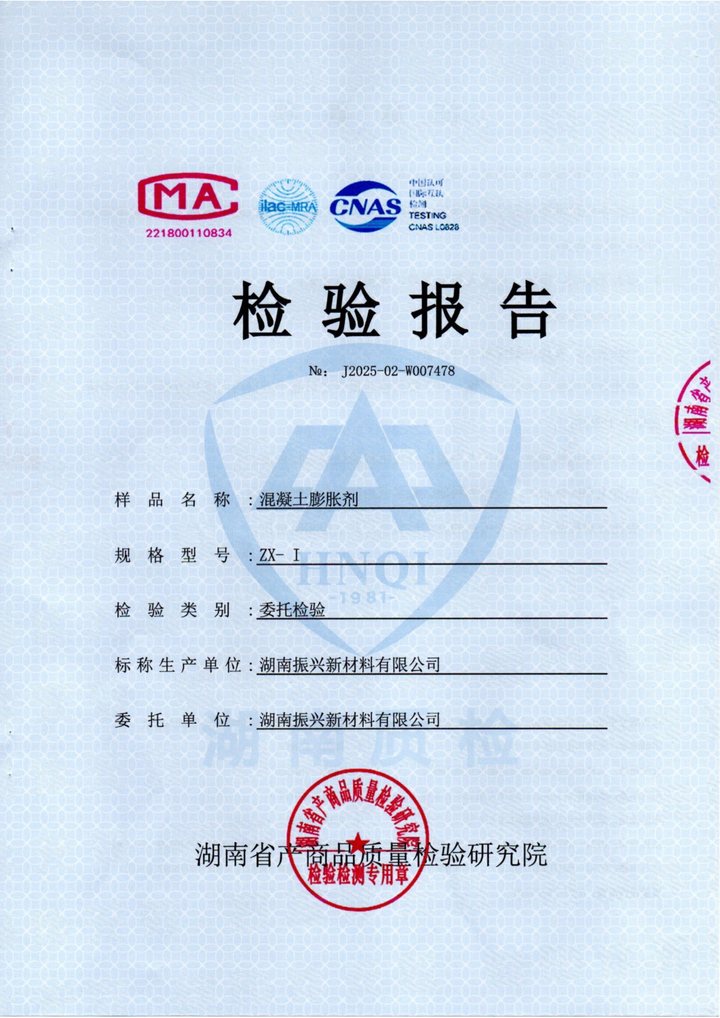
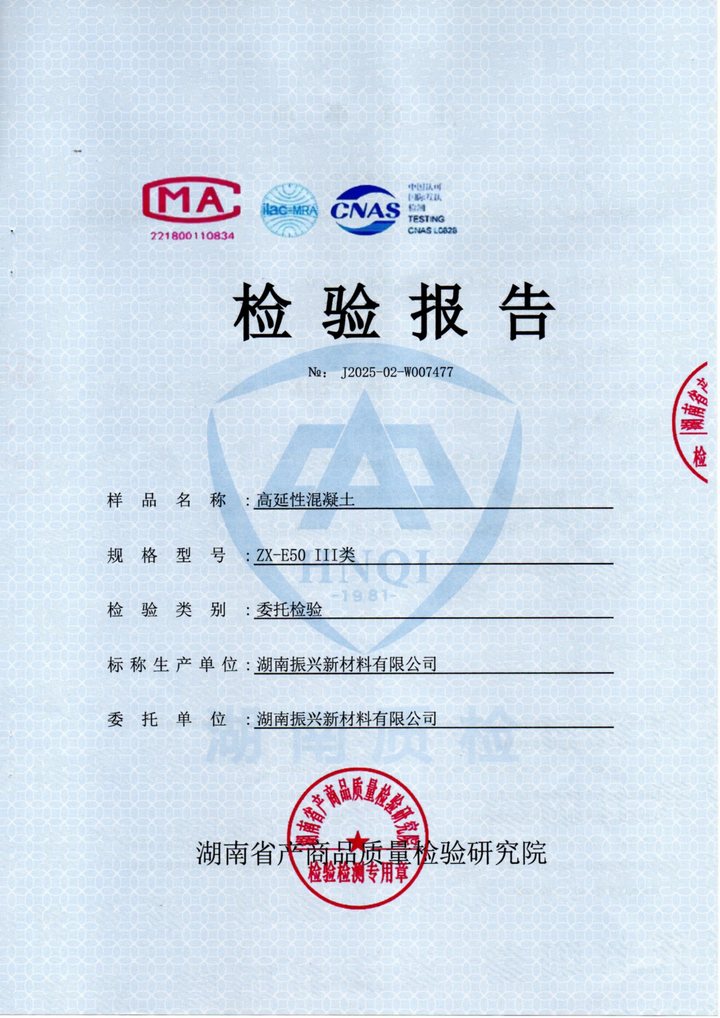
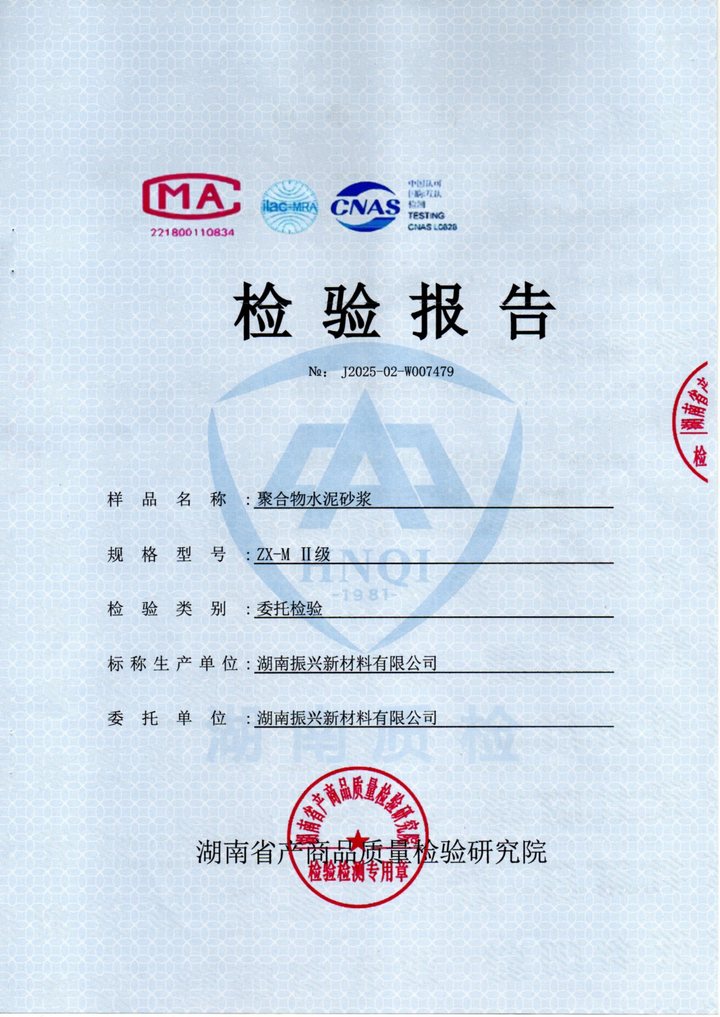
TEST REPORTS

Test Reports

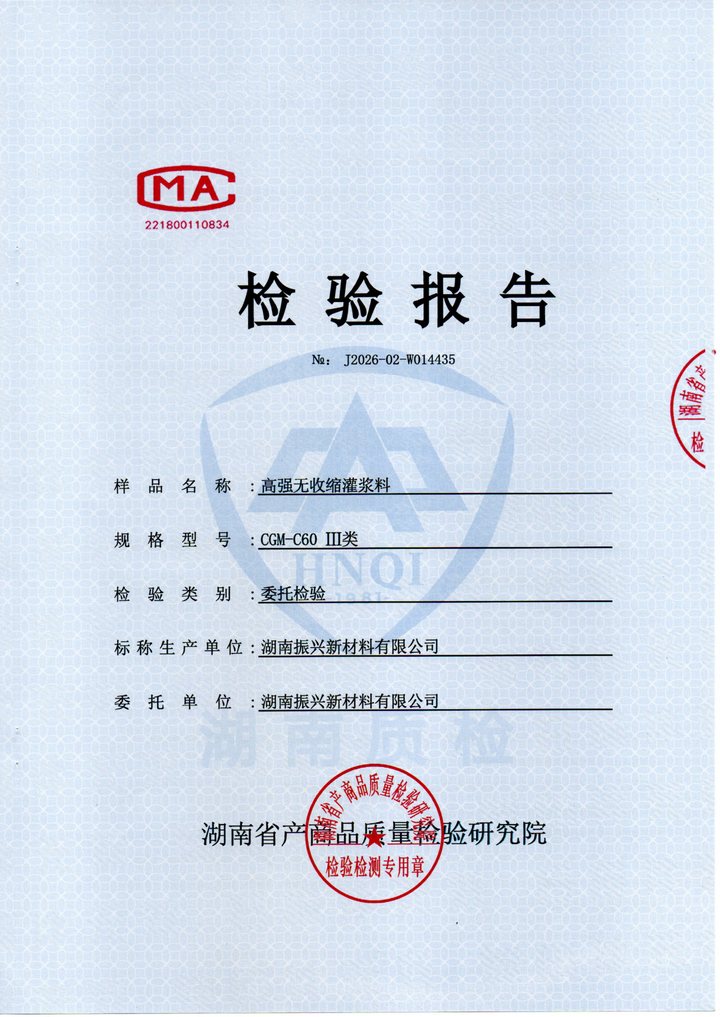
All ten specialty mortars are third-party tested, with MA/CNAS-marked, traceable reports updated batch by batch. Click to view full size.
FAQ

Frequently Asked Questions

The questions most often asked on the jobsite, answered clearly

1What is the purpose of grout's "slight expansion"?▾
Grout expands moderately (typically 0.1%–3.5%) during hardening, compensating for the drying shrinkage of cement-based materials. This keeps the grout layer tightly bonded to the base, bolts and steel plates with no voids, ensuring uniform load transfer and reliable anchoring — a property ordinary cement mortar cannot provide.
2What 28-day strength can high-strength non-shrink grout reach?▾
Our CGM-C60 Class III grout, tested by Hunan Provincial Institute of Product and Commodity Quality Inspection, achieved a 28-day compressive strength of 75.7 MPa (requirement ≥60 MPa) and a 1-day early strength of 29.9 MPa — well above the national standard. See the test report page for full data.
3What is the difference between duct grout and grout?▾
Both are engineered specialty mortars but serve different purposes. Duct grout is injected into prestressed tendon ducts of bridges, requiring extremely high flowability, long-distance pumping, slight expansion and no bleeding. Grout is used for equipment base secondary grouting, bearing grouting and anchor bolt anchoring, requiring early-and-high strength and strong bond with reinforcement.
4How do I control the dosage of mortar admixtures (Lime King / Modele)?▾
Generally 0.2%–0.5% of the cement weight, subject to the product manual. Too low a dosage gives little improvement; too high may reduce strength. We recommend a small trial mix to determine the optimum dosage before bulk use.
5Do your products come with test reports?▾
Yes. All ten specialty mortars are produced to national or industry standards and third-party tested, with reports bearing the MA/CNAS marks and the official inspection seal, fully traceable. Every batch ships with its test report and certificate of conformity, and additional tests or on-site sampling can be arranged on request.
6Do you provide on-site technical support?▾
Yes. We have a technical team that provides on-site support for key projects, including material selection, construction briefing and on-site sampling for re-inspection, to safeguard construction quality.