A crack-resistant protective-layer mortar with polymer and anti-crack fibers — prevents cracking and hollowing of plaster layers.
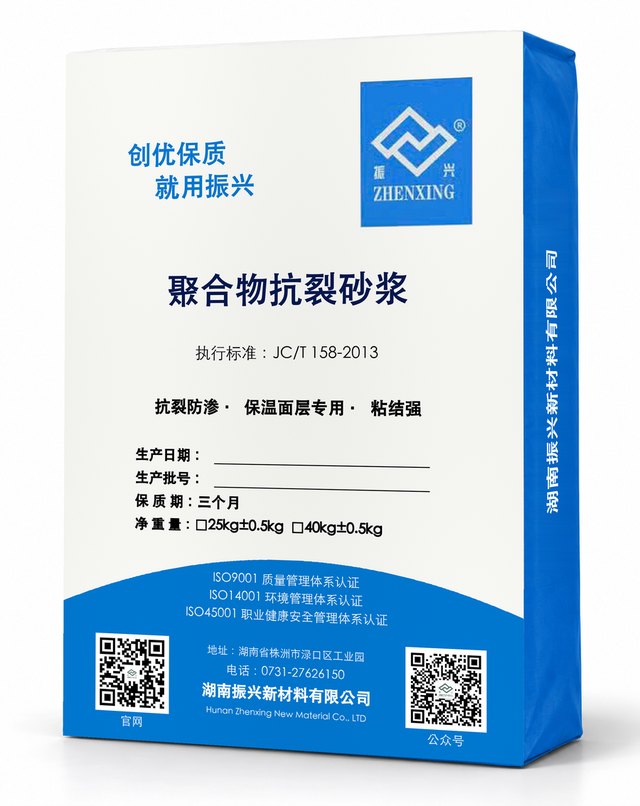
A cement-based anti-crack protective mortar blended with polymer powder and anti-crack fibers. It features strong crack resistance, good flexibility, high bond strength, water resistance and impact resistance, and is widely used as the anti-crack protective layer in exterior insulation systems and in general wall plastering to prevent cracking, hollowing and delamination.
Anti-crack fibers disperse shrinkage stress, markedly reducing plaster cracking.
Polymers give the mortar flexible deformation to follow minor substrate movement.
Bonds firmly to the substrate, resisting hollowing and delamination.
Stable and reliable under long-term exposure to water and impact.
Good workability and easy troweling for one-pass, high-efficiency application.
Works together with alkali-resistant mesh for a complete anti-crack system.
| Form | Single-component dry powder (add water and mix) |
|---|---|
| Standard | JG/T 158-2013 |
| Application | Exterior insulation anti-crack layer, interior / exterior plastering |
| Packing | Bagged, subject to factory packaging |
| QC | Every batch tested; test reports and certificates shipped with goods |
General application steps; refer to the technical brief for specifics
Clean dust and oil, repair defects, roughen the interface if needed.
Dampen the substrate before application to avoid over-fast water loss.
Apply a first coat of mortar and immediately embed alkali-resistant mesh.
Apply a second coat over the mesh, level and finish to uniform thickness.
Moist-cure promptly to prevent early cracking and strength loss.
All products are produced to national / industry standards and tested by third-party laboratories. Reports carry MA / CNAS marks and the official inspection seal, and accompany every shipped batch with the certificate of conformity.
Click a product to view its detail page